



Fine Chemical

2023.04.15

Fine chemical production often involves complex synthesis routes, reactive intermediates, heat-sensitive materials and multi-step batch processes. From pharmaceuticals and specialty polymers to electronic chemicals, pigments, additives and high-value intermediates, even a small change in temperature control, dosing rate, mixing efficiency or impurity profile can affect both product quality and process safety.

For R&D, pilot production and plant scale-up teams, the key question is not only whether a reaction can produce the target compound, but whether it can be controlled safely under real operating conditions. Zeal Instruments provides thermal analysis and calorimetry instruments to help laboratories evaluate fine chemical synthesis hazards, understand heat release behavior, identify runaway risks and support safer process design.

Why Fine Chemical Reactions Require Thermal Safety Evaluation

Fine chemical synthesis frequently uses energetic raw materials, strong acids or bases, oxidants, reducing agents, solvents, catalysts and unstable intermediates. Typical process safety challenges include rapid exothermic reactions, delayed decomposition, gas generation, pressure rise, crystallization heat, solvent boiling, side reactions and accumulation of unreacted materials during semi-batch dosing.

These risks may appear manageable at small laboratory scale but become more serious during scale-up. Larger reactors usually remove heat less efficiently than small flasks, and longer heat transfer paths can increase the risk of local overheating. If heat generation exceeds the cooling capacity of the system, the reaction temperature may rise faster than expected, triggering secondary decomposition or thermal runaway.

A structured fine chemical safety program should therefore evaluate both the desired synthesis reaction and possible undesired reactions. Desired reaction testing helps engineers understand heat flow, reaction enthalpy, dosing accumulation and cooling requirements. Undesired reaction testing helps identify decomposition onset, self-heating behavior, gas generation and worst-case thermal runaway scenarios.

Thermal Analysis Methods for Fine Chemical Process Safety

Different calorimetry techniques provide different levels of information. In fine chemical development, they are often used together to build a complete safety picture.

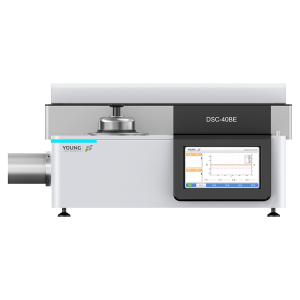
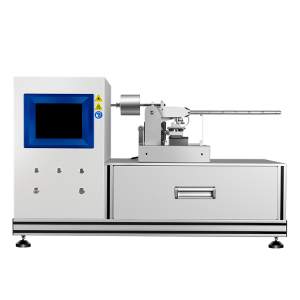
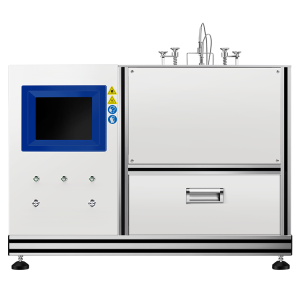
Differential Scanning Calorimetry (DSC) is commonly used as an initial screening method. With small sample quantities, DSC helps detect melting, crystallization, curing, phase transitions, decomposition and exothermic reaction behavior. For fine chemical laboratories, the Differential Scanning Calorimeter DSC-40AE can support early-stage evaluation of thermal stability, reaction heat release and kinetic behavior. DSC data helps determine whether a material or mixture requires more detailed hazard assessment before scale-up.

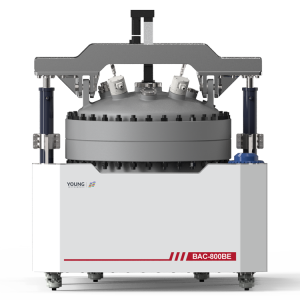
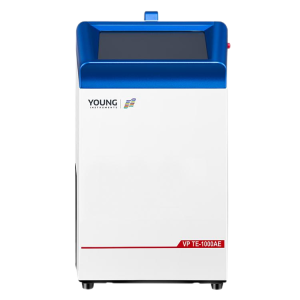
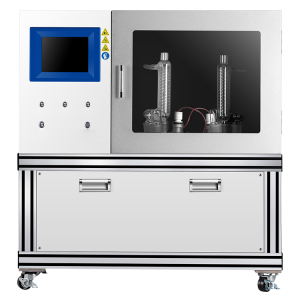
Reaction calorimetry is used to study the actual synthesis reaction under controlled process-like conditions. It measures heat generation during dosing, mixing, heating, cooling or reflux, helping process engineers calculate heat of reaction, heat release rate, conversion, accumulation, adiabatic temperature rise and maximum temperature of the synthesis reaction. Zeal’s Reaction Calorimeter RC HP-1000AE is designed for liter-scale simulation of batch and semi-batch reactions, making it especially relevant for fine chemical process development, optimization and scale-up safety evaluation.

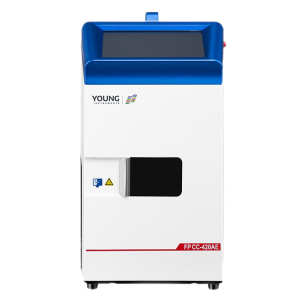
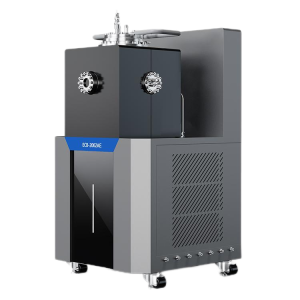
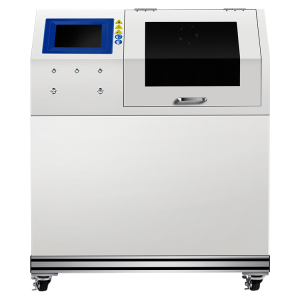
Accelerating Rate Calorimetry (ARC) supports assessment of runaway reactions under near-adiabatic conditions. This is important when engineers need to understand self-heating behavior, pressure rise, time-to-maximum-rate and the severity of a worst-case decomposition event. The Accelerating Rate Calorimeter TAC-500AE can be used for thermal hazard assessment of fine chemicals, pharmaceuticals, organic synthesis systems, polymers and reactive mixtures.

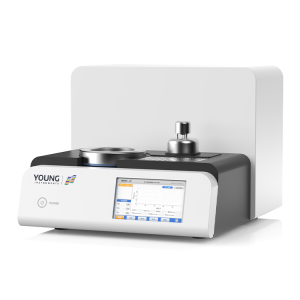
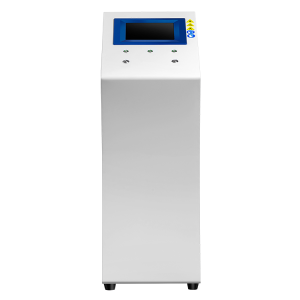
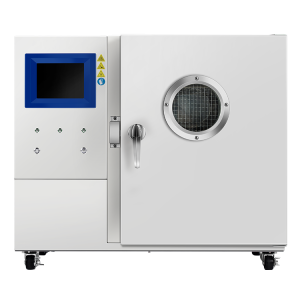
Rapid screening calorimetry provides faster hazard screening when laboratories need to compare multiple samples, formulations or process conditions. The Rapid Screening Calorimeter RSC-400AE helps evaluate reaction onset temperature, exothermic temperature rise, heat release and gas generation. It can be used before deeper calorimetric studies to identify samples that require further attention.

Supporting Safer Scale-Up from Lab to Production

Fine chemical scale-up requires more than repeating a successful laboratory recipe at a larger volume. Engineers must understand how heat release, mass transfer, mixing, dosing and cooling capacity change when moving from gram-scale experiments to pilot or commercial reactors.

Calorimetry data supports decisions such as safe dosing rate, maximum allowable process temperature, emergency cooling requirements, hold-time limits, solvent selection, reactor material selection and process control strategy. It also helps determine whether a process should be redesigned to reduce accumulation, avoid hazardous temperature ranges or improve intrinsic safety.

For example, reaction calorimetry can show whether a semi-batch feed strategy causes reactant accumulation. DSC or rapid screening results can indicate whether an intermediate begins to decompose near the intended operating temperature. ARC testing can then provide deeper information on self-heating and pressure behavior if a runaway scenario is possible. Together, these methods help safety engineers and process chemists make decisions based on measured data rather than assumptions.

Applicable Zeal Instruments for Fine Chemical Testing

Zeal Instruments offers a portfolio of thermal analysis and calorimetry instruments for fine chemical process safety laboratories. Depending on the sample type and testing objective, a typical workflow may include DSC for thermal stability screening, RSC for rapid hazard screening, reaction calorimetry for process understanding and ARC for runaway risk assessment.

For volatile solvents, flammable liquids or process materials where physical safety parameters are also important, laboratories can also refer to Zeal’s physical and chemical parameter testing instruments, including flash point and vapor pressure testing solutions.

Build a Data-Driven Fine Chemical Safety Workflow

A reliable fine chemical safety workflow helps teams reduce scale-up uncertainty, improve process robustness and protect people, equipment and production continuity. By combining DSC, reaction calorimetry, rapid screening calorimetry and accelerating rate calorimetry, laboratories can evaluate thermal hazards throughout the development lifecycle—from route selection and process optimization to pilot trials and manufacturing support.

Zeal Instruments helps fine chemical manufacturers, pharmaceutical developers, research institutes and third-party testing laboratories select suitable instruments for reaction hazard evaluation, process safety assessment and scale-up decision making. Contact Zeal Instruments to discuss your sample type, target process, testing workflow and required safety data.